 OTTO
OTTO
Austin, Texas · otto.com (planned) · Page 1
Otto is a multi-agent system, not a chatbot. Specialized agents collaborate under a coordinator with persistent memory of the project, client, and vertical. Same audit trail. Hours, not days. Capacity uncoupled from headcount.
The thesis in one page.
The bottleneck
Mid-market professional-services firms — engineering, legal, financial advisory, executive search — spend 50–100+ senior-staff hours and $4,000–$8,000+ on every major deliverable. The cost is non-recoverable when the deal doesn't close.
The proof
Tender Intelligence — our first portfolio implementation — is in production with a chemical & process engineering firm. Eleven versions shipped solo in six weeks. A $4,325–$8,650 manual workflow now runs in 2–3 minutes at $1.30 API cost.
The architecture
A seven-agent orchestration plane with persistent memory, deterministic cross-checking, reviewer gating, chat-driven regeneration, and a zero-stale-state guarantee. Built once; adapted per vertical in days.
The offering
Four sequenced phases on one platform. Phase 1 (the spear): custom orchestration builds that generate revenue and gather proprietary data. Phase 2 (the sword): targeted engineering products built on Phase 1 data, with higher EBITDA. Phase 3 (the shield): physical AI systems that combine hardware and interpretation models, creating a data moat. Phase 4 (the long-term vision): a large language model for engineering, rolled out sector by sector. Tender Intelligence is the first Phase 1 deployment; the scheduling tool that came out of it is the first Phase 2 product.
The team
A domain operator (Putter, 20+ years EPCM, 400+ projects), a technical co-founder (Le Roux, Senior Staff Engineer, sole builder of the proof point), and a finance lead (Roux, CA SA, M&A and capital structuring).
The capital strategy
Otto is bootstrap-capable. Years 1–2 services revenue funds Years 2–3 productization. External capital is only raised if it accelerates an opportunity that growth from operations cannot.
Otto is an AI orchestration company building toward a single long-term outcome: a large language model and supporting neural networks trained on proprietary engineering data that no other company has access to. We get there in four phases. Phase 1 builds production multi-agent systems for clients and gathers the data. Phase 2 productises that data into targeted engineering tools. Phase 3 extends Otto into physical AI, where the data moat compounds. Phase 4 is the engineering LLM itself, rolled out sector by sector. Data is the golden thread, and the largest asset this company will ever own.
The orchestration gap.
Across mid-market professional services, the bottleneck is rarely the same shape twice. Every firm has its own version — a proposal cycle that takes weeks, a due-diligence pack that costs $20k in associate time, a candidate-research process that defeats the third hire, a design review that pinches margin on every project. The pattern repeats; the specifics never do.
The work is high-judgment, document-heavy, and gated by senior staff. AI can compress it — but generic tools don't fit, and custom builds historically don't reach production. The orchestration layer between frontier models and reliable production output is the actual hard part. Otto designs and ships that layer, custom, per firm.
The work doesn't scale
Senior-staff judgment is the rate-limiter on every revenue cycle. Proposals, estimates, due diligence, conflict checks, design reviews — each costs days of expensive time, and that time doesn't compound. The next deliverable starts cold.
Every vertical has its version
Engineering: tender extraction, BOQ, schedule, reconciliation. Legal: intake, conflict checks, contract review. Financial advisory: pitch decks, IM generation, deal screening. Executive search: candidate research, market mapping. Same structural pattern, different domain.
Off-the-shelf AI doesn't fit
Generic LLM tools draft prose and extract text. They don't enforce cross-agent alignment, carry context across re-runs, or gate human review. The last-mile work — making outputs reliable, auditable, and defensible enough to put in front of a client — is exactly what's missing.
Custom builds historically fail to ship
Months of development, fragile prompts, no eval rigor, no provenance, no audit trail. By the time the system is "done," the workflow has changed and trust has eroded. The orchestration layer is the actual hard part — and that's exactly what Otto productizes.
What Otto does instead
- We sit with the firm and find the bottleneck. Not "where can AI help?" — "where is value getting stranded in process inefficiency?" That's a different conversation.
- We design a custom orchestration solution. Same architectural primitives every time (extraction, specialist agents, coordinator, memory, reviewer, chat-as-orchestrator, auto-sync) — adapted to the firm's specific workflow.
- We ship in weeks. Production deployment with monitoring, eval sets, runbooks, and a documented handoff. Not a prototype, not a demo — a system the firm runs on.
- We operate it. Monthly retainers cover continuous improvement, eval regression tracking, prompt updates as models evolve, and new workflow extensions when the firm's needs change.
This document describes how Otto closes that gap — not with a chatbot, not with a prompt template, but with custom AI orchestration architectures that ship in weeks and operate in production. Tender Intelligence, our first portfolio piece, is the existence proof. The next piece will look different, run a different vertical, and use the same underlying platform.
Three converging tailwinds.
- Frontier-model capability has crossed the production threshold. Tool-use, structured outputs, long-context reasoning, and reliable function calling are now defensible primitives. The architecture stops fighting the model and starts composing on top of it.
- Mid-market services firms are ready to buy outcomes. Firms in the $5–500M revenue band have margin pressure but no internal platform team. They cannot wait for a Big Four AI practice; they need a vendor that ships a working system in weeks and operates it without a 50-person change-management program.
- Orchestration patterns have matured. Memory, coordinator/reviewer gating, eval-driven regeneration, chat-as-orchestrator, and auto-sync cascades are now repeatable across verticals. The first vertical takes six weeks to build; the second takes two.
The window is the next 18–24 months. After that, this layer commoditizes into vertical SaaS — and the firms that own the data and the deployments win.
An AI orchestration company for vertical professional services.
Otto operates at the intersection of three categories that rarely converge in a single team:
- AI Orchestration — multi-agent systems, tool-use, persistent memory, eval-driven regeneration
- Vertical Domain Expertise — engineering, finance, legal — knowledge of how the work actually gets done, not just how the documents look
- Engineering Execution — production systems with monitoring, runbooks, eval sets, version discipline — not prototypes
This positioning enables Otto to originate vertical AI opportunities through domain partnerships, de-risk them with production-grade orchestration, and deliver them internally: reducing reliance on systems integrators and improving both speed and margin capture. The same domain access and execution discipline then extend into Phase 2 productised tools, Phase 3 physical AI systems, and Phase 4 engineering models. Data accumulates across all four phases and is the long-term asset of the company.
What we are not
- Not a generalist AI consultancy. We do not write strategy decks; we ship deployed systems.
- Not a SaaS company in Year 1. The product comes from the work, not from a roadmap.
- Not a body shop. Fixed scope, fixed price, eval-set rigor, runbooks before handoff.
- Not a chatbot vendor. Chat is a control surface, not the product.
Data is the largest asset Otto will ever own.
From day one of every engagement, data is collected, cleaned, structured, and stored with future use in mind: by Otto's own engineering LLM, for training the neural networks that power Phase 3 physical AI, and as the basis of valuation when Otto sells, lists, or raises capital.
Every Phase 1 deployment is a data-gathering operation. Every Phase 2 product is a data-gathering operation. Every Phase 3 physical AI system is a data-gathering operation. By the time Phase 4 begins, Otto holds engineering data that competitors cannot replicate because they were never inside the workflows where it was generated.
This is the parallel to how Tesla's value sits in its driving data, not in its drivetrains. Otto's value will sit in its engineering data, not in any single deliverable. Data discipline is non-negotiable across the company: schema, provenance, versioning, consent, security, and structure are designed into every deployment from day one.
The Otto Orchestration Plane.
The architecture is the moat. Most AI implementations are a single LLM call wrapped in retry logic. Otto is a layered orchestration plane with provenance, evals, memory, and gating — built once, adapted per vertical.
What this enables
- Confidence stops regressing on re-runs. The memory layer carries forward user feedback, prior decisions, and manual corrections. Re-runs improve confidence; they do not reset it.
- Sections cannot disagree. The auto-sync cascade re-derives every dependent section in milliseconds. The user never sees a BOQ tab and a schedule tab showing different totals.
- Human review is structurally enforced. The reviewer gate blocks transitions into "ready" until data presence, pricing completeness, and cross-check severity are all satisfied. Overrides are audited.
- Chat is a real orchestrator, not a wrapper. The user types "redo the schedule with civil phase plus two weeks" and the schedule is rebuilt, the coordinator re-cross-checks, the reconciliation re-runs, the reviewer gate re-evaluates — automatically.
This is not theoretical. Sections 7 and 11 describe the production deployment. The architecture above is the same architecture that shipped eleven versions in six weeks.
Four phases, one platform.
Four phases, one platform, one golden thread. Each phase generates revenue, intellectual property, and proprietary engineering data that compounds into the next. Phase 1 funds the company and runs through Otto's lifetime. Phase 2 builds on Phase 1's data. Phase 3 extends Otto into physical AI. Phase 4 is the engineering LLM that is the company's long-term reason for existing. Data is what links all four.
| Phase | What we deliver | Pricing / commercial model |
|---|---|---|
| Phase 1 — The SpearImplement, ongoing | Custom orchestration builds for client workflows. Production deployment, monitoring, runbooks, eval sets. 30–60 day delivery. Every deployment gathers structured data that feeds Phase 2, 3, and 4. Runs through the lifetime of the company as a parallel income source. | $30–80k fixed scope + $2.5–6k / month operate retainer |
| Phase 2 — The SwordProductise, from year 1 | Targeted engineering products built on Phase 1 data. First product: the scheduling tool emerging from Tender Intelligence at EPCM, planned to become the integration layer between Microsoft Project and Primavera P6. | Productised licensing. ACV bands [TO BE CONFIRMED]. Higher EBITDA margins than Phase 1. |
| Phase 3 — The ShieldPhysical AI, from year 2 | Physical AI systems that combine hardware with domain interpretation models. First system in scoping: NDT X-ray with automatic interpretation. Each system is both a product and a data-gathering instrument. | Hardware-plus-software margins, recurring data-service revenue. Pricing [TO BE CONFIRMED]. |
| Phase 4 — The Engineering LLMVision, multi-year | A large language model specifically for engineering, trained on the data Otto has accumulated across Phases 1, 2, and 3. Rolled out one engineering sector at a time, with a dedicated team per sector. | Long-dated. Pricing model [TO BE CONFIRMED]. |
Phase 1 funds Phase 2 and contributes to the funding of Phase 3 and Phase 4. Phase 2 amplifies that funding through productised licensing. Phase 3 builds the data moat that makes Phase 4 defensible. The sequence does not require external capital to start; it requires Phase 1 client wins, disciplined data capture, and the patience to keep building.
Tender Intelligence.
Otto's reference implementation is in production with EPCM Holdings, a chemical and process engineering firm. The system is the first instance of the architecture described in Section 5 — and the first revenue source for Phase 1.
Roughly a 3,300× cost compression on the per-bid operating expense. Quality and audit trail improve in the same step.
What shipped
- Seven agents — Extractor, Cost Estimator, Project Planner, Top-Down Estimator, Coordinator, Reviewer, Engineering Assistant
- Eleven versions in six weeks — v0.5.4 through v0.11.3, including the memory layer, coordinator agent, reviewer gate, unified re-run, chat-as-orchestrator, and auto-sync cascade
- Confidence trajectory — ~70% on first extraction with drawings parsing; 85%+ after two re-runs (the memory layer is what holds the gain)
- Production-deployed — live with the EPCM team, used in active bid cycles, fully audited via the reviewer override trail
What this proves
- Speed to deployment is a structural advantage. A multi-agent production system in six weeks, solo, is two orders of magnitude faster than incumbent vendors. That speed compounds across verticals — the second build will be faster than the first, and the third faster than the second.
- The architecture is real. The seven-layer plane in Section 5 is not a diagram; it is shipped code, in production, against real bid cycles.
- The economics work. $4,325 of human time replaced by $1.30 of API cost is not a marketing claim — it is the operating cost of the deployment.
EPCM Holdings is Otto's first client and reference implementation customer. The relationship is contractual, not equity-based. Other vertical implementations follow the same pattern: domain partner identifies the workflow; Otto builds, deploys, and operates.
Domain. Technical. Financial.
Three co-founders, three load-bearing functions, no overlapping responsibility.
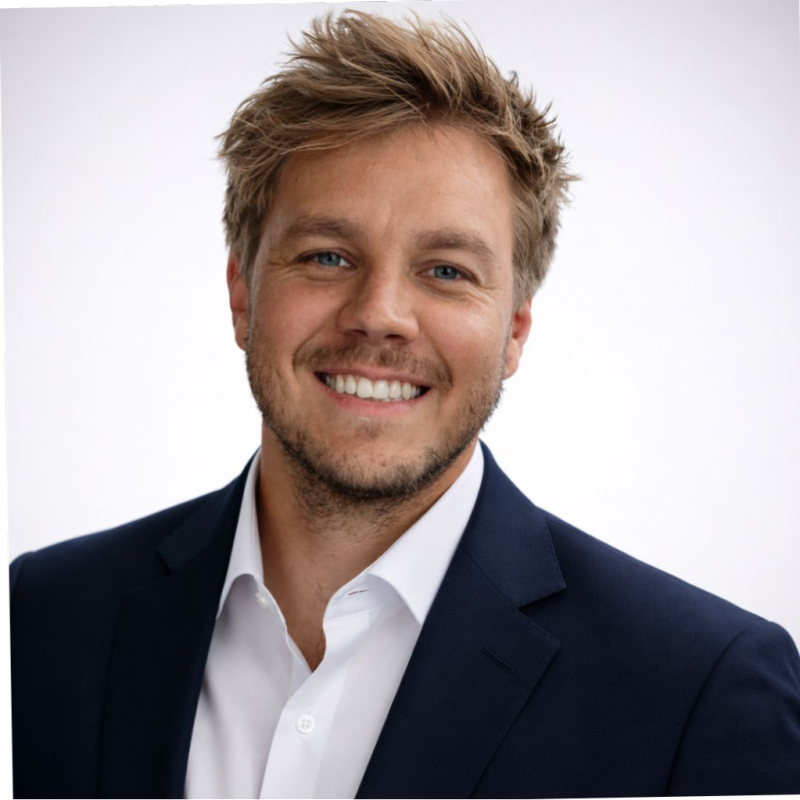
Erick Putter — Co-founder & CEO
20+ years in chemical and process engineering. 400+ delivered projects across EPCM, energy, and infrastructure. Currently COO of EPCM Holdings. 6,000+ engineering followers on LinkedIn. Holds origination, domain authority, and commercial relationships across mid-market industrial services.

Pieter Le Roux — Co-founder & CTO
Senior Staff Software Engineer building production agentic AI platforms. 12+ years software engineering, 5+ years in production AI systems. Sole builder of Tender Intelligence — concept to production deployment in six weeks. Holds technical architecture, engineering execution, and platform direction.

Daniel Roux — Co-founder & CFO
Chartered Accountant (South Africa). Former PwC audit and assurance. M&A due-diligence experience at CDS. Currently CFO of EPCM Holdings USA. Holds capital structuring, financial discipline, and the institutional network across capital, finance, and corporate governance.
Domain credibility, technical execution, and financial structuring — co-founded and co-funded. No external technical hires required to ship Year 1; no external commercial hires required to land Year 1's pipeline.
Vertical professional services.
Otto's market is not "AI." It is the layer of mid-market professional-services workflows where domain judgment, document density, and bid-driven revenue cycles intersect.
Verticals, ranked by demand evidence and speed to revenue
- EPCM & process engineering — anchor vertical. Reference implementation (Tender Intelligence) live in production. Pipeline already in motion via founder networks.
- Mid-market legal — boutique firms (5–30 attorneys), document-heavy practices, no internal technology team. Hourly billing rates justify automation spend; intake, conflict checks, and tender response are immediate targets.
- Executive search — proposal generation, candidate research, ATS integration. Founder networks include 1,200+ warm connections in the executive search and management consulting space.
- Financial advisory & M&A — pitch decks, information memoranda, deal screening. Direct access via founder financial network.
- Adjacent EPCM specialties — civil, structural, mechanical bidding shops. Same Tender Intelligence template; minimal vertical adaptation cost.
Three vertical implementations in 12 months; vertical product GA in months 13–18. No paid acquisition spend in Year 1 — clients land through founder networks and demonstrated work.
Four streams. Compounded sequencing.
Four streams. Compounded sequencing. Phase 1 generates revenue from day one and continues to generate revenue through the lifetime of the company. Phase 2 begins in Year 1 and scales through Years 2 and 3. Phase 3 begins in Year 2. Phase 4 is long-dated and does not contribute meaningful revenue in the first three years. Three-year revenue projection [TO BE CONFIRMED] pending updated bottom-up build.
Stream 1 — Phase 1 (Spear): Implement
Y2: [TBC]
Y3: [TBC]
Stream 2 — Phase 2 (Sword): Productise
Y2: [TBC]
Y3: [TBC]
Stream 3 — Phase 3 (Shield): Physical AI
Y2: [TBC]
Y3: [TBC]
Stream 4 — Phase 4 (Engineering LLM): Sector models
Y2: $0
Y3: $0 → [TBC] (likely de minimis in first three years)
The Year 2 to Year 3 step-up reflects the shift from Phase 1 services revenue to Phase 2 product revenue and the first commercial Phase 3 systems. Phase 4 is deliberately excluded from the three-year financial picture: it is funded out of Phase 1, 2, and 3 margin, and its revenue contribution is back-loaded beyond the planning horizon shown here. Year 3 figures are bound by delivery capacity, Phase 2 product traction, and Phase 3 hardware partnership conversion, not by net-new origination.
Active commercial activity.
- EPCM Holdings tender automation engagement at Scale tier ($30k + $3.5k/mo), in final commercial negotiation; deployment Q3 2026
- Three SMB Zapier-to-orchestration migrations, blended scope $15–35k each, technical scoping complete
- Two EPCM-adjacent workflows (project controls, change-order automation), scoped $40–80k each
- Mid-market executive search firm — candidate-research orchestration, $60–120k scope under technical evaluation
- Boutique law firm — intake and tender-response automation, $40–80k scope under commercial review
- Two financial advisory firms sourced through founder financial network, scopes under definition
- Multiple data center developer counterparties sourced via NVIDIA GTC and EPCM Holdings introductions, exploring AI orchestration of pre-construction and procurement workflows
- Two enterprise software platforms in early discussion regarding embedded orchestration partnership
How clients land.
- Founder networks (months 1–6). Erick (EPCM domain, 6,000+ followers in engineering), Daniel (financial and M&A networks), Pieter (production AI engineering leadership). Every Year 1 deal lands through warm intro, not paid acquisition.
- Vertical case studies (months 3–12). One detailed published case study per vertical (Tender Intelligence first), republished from accenzio.com to otto.com. Each case study converts into a sales asset for the next vertical.
- Channel partnerships (months 6–18). Anthropic startup partner program. n8n certified migration partner. MBA Construction cross-referral. Each partnership opens an account base we cannot reach directly.
- Conference and content (months 12+). Engineering automation, legal-tech, executive-search-ops conferences with the Tender Intelligence demo as the centerpiece. We do not attend; we present.
No paid acquisition spend in Year 1. The pipeline shown in Section 11 was sourced entirely through founder networks and demonstrated work. The model only justifies paid spend once unit economics on retainer revenue are proven (target: month 9).
Concrete milestones.
Bootstrap by design.
Otto is bootstrap-capable. Years 1–2 services revenue funds Years 2–3 productization. We will only raise external capital when it accelerates an opportunity that growth from operations cannot — most likely the second senior engineer hire (month 6) or platform infrastructure for productized GA (month 12–18). The cap table below is the founding structure; no external dilution has occurred.
Founding cap table
| Holder | Role | Equity |
|---|---|---|
| Erick Putter |
Co-founder & CEO | 32.0% |
| Pieter Le Roux |
Co-founder & CTO | 32.0% |
| Daniel Roux |
Co-founder & CFO | 32.0% |
| Option pool (unallocated) | First two hires | 4.0% |
Structure and discipline
- Vesting: 4-year linear vest with 1-year cliff for all founders. Standard.
- IP assignment: All Tender Intelligence and Accenzio platform IP assigned into Otto Holdings, Inc. on incorporation. Documented in operating agreement.
- Governance: Three-founder board until any external capital event. Equal voting weight on commercial decisions; CTO holds technical architecture authority; CFO holds financial authority.
- No external shareholders at founding. EPCM Holdings is the first client and reference implementation customer. The relationship is contractual, not equity-based.
Equal three-way founder split (32/32/32) reflects co-founded, co-funded equity. The 4% option pool is sized for the first two hires; further dilution comes with capital events or scaling needs and is decided by the founder board. Final split is provisional pending counsel-drafted operating agreement.
Working relationships.
Additional partnerships across executive search, mid-market legal, and financial advisory verticals are in early conversation through founder networks. They will be added to this list when they cross from conversation into commercial commitment.
Honest constraints.
| Risk | Mitigation |
|---|---|
| CTO is the technical bottleneck until first engineering hire | Senior AI engineer hire at month 6, funded by services revenue. Architecture and runbooks documented to make handoff feasible. |
| Phase 2 productisation depends on Phase 1 data being clean, structured, and consented for re-use | Data standards (schema, provenance, versioning, consent) are designed into every Phase 1 deployment from day one. Data discipline is treated as a primary deliverable on every Phase 1 engagement, not a clean-up step later. |
| Phase 3 (physical AI) requires hardware and field-execution expertise outside the current founder skill set | Phase 3 is gated on a hardware partnership. Otto provides the orchestration layer and the interpretation models; the partner provides the hardware and the field credentials. Margin captured on the data, the model, and the integration layer. |
| Phase 4 (engineering LLM) requires sustained capital and time before any revenue | Phase 4 is funded out of Phase 1, 2, and 3 operating margin. Data accumulation begins on Day 1 of Phase 1. Phase 4 monetisation is back-loaded beyond the current three-year horizon. The Phase 4 asset is the engineering data corpus; its value compounds even when no revenue is being booked against it. |
| Vertical concentration in EPCM during Year 1 | Diversification into legal and executive search by month 9. Three verticals live by month 12. No single client exceeds 40% of revenue after month 9. |
| Frontier model pricing volatility | Multi-model architecture (Anthropic + OpenAI). Eval-driven model selection per task. Price changes flow through as cost, not as breakage. |
| Founders' time allocation — CTO maintains an external full-time role | Defined commitment levels in operating agreement. CTO transitions to Otto full-time at sustained $50k+ MRR (month 9–12 target). Until then, CTO time is bounded and prioritized via founder operating cadence. |
| Operating agreement not yet drafted at the date of this memorandum | Counsel-drafted operating agreement signed at month 1, prior to the second client engagement and prior to any IP licensing decisions. |
Strategy & Business Memorandum · May 2026 · Strictly Private & Confidential